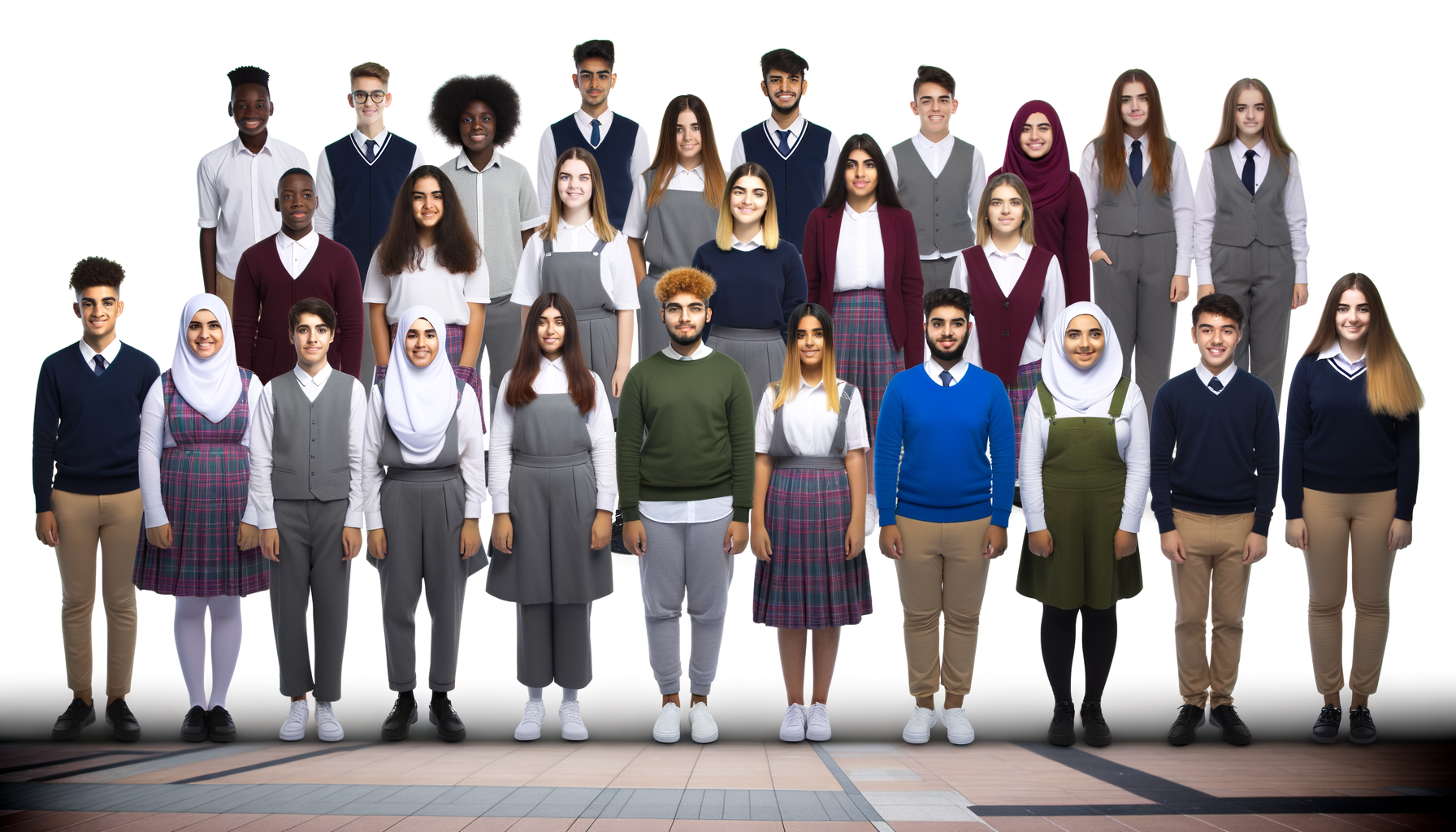
School uniforms are a staple in education systems worldwide, providing a sense of unity and removing the distraction of fashion competition. This article delves into the history, benefits, and modern adaptations of school attire, offering a comprehensive overview of its role in today’s schools.
The Historical Tapestry of School Attire
Building upon the rich historical roots of school uniforms, their contemporary role within the educational setting emerges as both a continuation and evolution of past practices. As society has evolved, so too has the understanding and implementation of school attire in fostering a conducive learning environment. In this vein, uniforms are not just about adherence to tradition or aesthetic appeal but serve as a vital cog in the machinery of educational equality and focus.
Uniforms transcend mere fabric to symbolize a leveling of the playing field for students across socioeconomic backgrounds. In the mosaic of a classroom, where each child comes from a unique set of circumstances, school uniforms act as a unifying thread, diminishing the visual markers of economic disparity. This egalitarian approach aims to shift the focus from what one wears to who one is, encouraging students to judge each other based on character and abilities rather than the brands or styles they can afford.
Moreover, the adoption of a standardized dress code has shown potential in reducing instances of bullying and social segregation related to clothing. By eliminating the competition and peer pressure associated with fashion in schools, uniforms can help create a safer, more inclusive environment conducive to everyone’s learning and well-being.
Additionally, school uniforms contribute significantly to fostering a focused academic atmosphere. By minimizing distractions associated with diverse and sometimes provocative personal attire, uniforms promote discipline and concentration among students. This uniformity is believed to enhance the seriousness with which students approach their studies, promoting an ethos of scholarly engagement and respect for the learning environment.
In conclusion, as the educational landscape continues to evolve, the role of uniforms within this setting becomes increasingly multifaceted. Not only do they serve as a bridge to the past, echoing the discipline and uniformity of earlier times, but they also embody contemporary values of equality, safety, and academic focus. Through this dual function, school uniforms remain a poignant symbol of educational ideals, woven into the very fabric of learning environments worldwide.
Uniforms in the Educational Setting
Following the exploration into the rich tapestry of school attire’s historical evolution, we delve into the complexities of uniforms within the educational setting, uncovering their pivotal role in molding a conducive learning environment. School uniforms, transcending mere tradition, have emerged as instrumental tools in establishing an egalitarian academic atmosphere where the focus squarely rests on education, rather than on socio-economic disparities.
Equal Standing for All Students
One of the most compelling arguments in favor of school uniforms is their ability to equalize students from diverse socio-economic backgrounds. By mandating a standard mode of dress, schools effectively blur the lines that might otherwise distinguish affluent students from their less fortunate peers. This semblance of equality can significantly mitigate feelings of inadequacy or envies that may distract from learning or erode self-esteem. A uniform dress code, therefore, not only fosters a sense of belonging and community among students but also reinforces the notion that education is a right, not a privilege contingent upon financial status.
Reduction in Bullying Related to Clothing
Another salient benefit of school uniforms is their potential to curb bullying and harassment associated with fashion and clothing. In schools without dress codes, students often face pressure to conform to constantly evolving, and sometimes expensive, fashion trends to avoid ridicule. Uniforms remove this pressure, consequently diminishing a common avenue for bullying. Reduced bullying over attire can contribute to a safer, more welcoming school environment conducive to students’ emotional and academic welfare.
Fostering a Focused Academic Atmosphere
Furthermore, school uniforms can contribute to the creation of a more focused academic environment by minimizing distractions. Without the daily spectacle of varied and potentially distracting attire, students can devote more attention to learning. The simplification of morning routines, alleviating the stress of outfit selection, and the curtailment of classroom distractions regarding attire, collectively facilitate a more academically centric ethos. The presence of uniforms signals a clear expectation for discipline and dedication towards studies, reinforcing the primary purpose of school as a place for learning and personal development.
As we advance towards the chapters that scrutinize the challenges and critiques associated with school uniforms, it becomes clear that while uniforms strive to embed equality, reduce bullying, and promote an academically focused environment, they are not without their controversies and complexities. The ensuing discussion will critically evaluate the cost of these policies in terms of personal expression, financial burdens on families, and the broader debate over conformity versus individuality, thus providing a holistic view of the intricate fabric that constitutes the role of school uniforms in educational settings.
Challenges and Critiques
While school uniforms serve to equalize students and minimize distractions, as discussed in the previous chapter, they also attract a fair share of criticism and face numerous challenges. Among the most significant of these is the tension between uniform policies and personal expression. Critics argue that mandating a standard dress code stifles students’ ability to express their unique identities and individualities. This suppression of self-expression is viewed not merely as an inconvenience but as a fundamental limitation on personal development and the exploration of identity, which are critical aspects of the educational experience.
Another considerable challenge is the financial burden that uniform policies can place on families. Despite the intention to create a level playing field, the cost of specific uniform items can be prohibitive for some. While uniforms are often justified as being more cost-effective than regular clothing over time, the initial outlay for uniforms, particularly for specialized items that cannot be reused outside the school context, poses a significant hardship for lower-income families.
The debate over conformity versus individuality remains central to discussions about school uniforms. Proponents of uniforms argue that they promote a sense of unity and discipline, essential for an effective learning environment. Critics, however, contend that this enforced conformity undermines the cultivation of critical thinking and creativity, essential skills in both academic and personal growth.
Practically, schools face significant challenges in implementing and enforcing uniform policies. Determining appropriate attire, dealing with non-compliance, and ensuring access to uniforms for all students require considerable administrative effort and resources. Additionally, schools must navigate the fine balance between enforcing uniform standards and respecting cultural and religious dress norms, further complicating policy application.
These challenges and critiques underscore a complex landscape surrounding school uniforms. As the next chapter will explore, innovations and adaptations in uniform design and policy are underway, attempting to address these concerns while retaining the benefits that uniforms can offer. Future trends in school uniforms are likely to focus on inclusivity, technological integration, and sustainability, aiming to harmonize traditional objectives with contemporary educational values and societal norms.
Future Threads: Innovations and Adaptations
In the evolution of school uniforms, the forthcoming trends point towards a confluence of technology, environmental sustainability, inclusivity, and fashion sensibility. The landscape of educational attire is on the cusp of significant transformation, poised to address the critique of stifling individual expression and environmental concerns.
The integration of smart fabrics into school uniforms heralds a new era where clothing is not just about conformity but functionality and adaptability. For instance, textiles that change color with temperature can offer a playful element allowing for a sense of individuality while staying within the uniform framework. Additionally, fabrics capable of monitoring health vitals can play a crucial role in ensuring student well-being, sending alerts for unusual patterns indicative of stress or illness.
Environmental sustainability has become a paramount consideration. The shift towards using eco-friendly materials in school uniforms—such as recycled polyester and organic cotton—illustrates this trend. Moreover, adopting uniforms made from durable, easy-to-care-for fabrics reduces the need for frequent replacements, thereby lessening environmental impact.
Cultural adaptations for inclusivity are crucial in acknowledging the diversity within the student body. This involves designing uniforms that are respectful and considerate of different cultural norms and practices, such as allowing hijabs or turbans. Ensuring that uniform policies are flexible enough to accommodate these needs without compromising the sense of unity school uniforms provide is essential.
Balancing tradition with contemporary fashion demands is another trend shaping the future of school uniforms. There is a growing acceptance that uniforms can be stylish yet functional, moving away from outdated designs to more modern, ergonomic ones. This evolution reflects a broader understanding that comfort and aesthetics play a significant role in students’ satisfaction and identity.
As we look to the future, it is clear that school uniforms are not just about the fabric but the stories they weave—of innovation, sustainability, inclusivity, and fashion. These trends are setting the stage for a new chapter in the narrative of educational attire, where uniforms not only meet practical needs but empower and include every student, preparing them for success in and outside the classroom.
Conclusions
School uniforms have evolved significantly, reflecting changes in educational priorities and societal values. Despite varied opinions on their effectiveness, they remain an integral part of many educational systems, promoting equality and focus. Moving forward, innovations are likely to make school attire more sustainable, inclusive, and adaptable to modern needs.